
Indo-German Support Project for Climate Action in India
January-March | 2026Bilateral
Mitigation of Climate Change
Link To Project: Click Here
IKI India Interface drives climate action in India through state-level rollout of digital co-benefit tools, strengthened public sector decarbonisation via LeadIT, high-level engagement at WSDS 2026, and a strategic roundtable.

Project Updates
Launch of Climate Co-benefit Tools and Roadmap in Maharashtra and Tamil Nadu
Indo-German Support for Climate Action in India and the IKI Interface Project (CAP) implemented by GIZ India under the International Climate Initiative has been working with the states of Maharashtra and Tamil Nadu to develop and pilot Climate Co-Benefit methodologies for the urban forestry schemes and Single Use Plastic Ban policy. The developed methodologies have been converted into web-based tools and the roadmaps to implement these tools at the state level have also been developed.
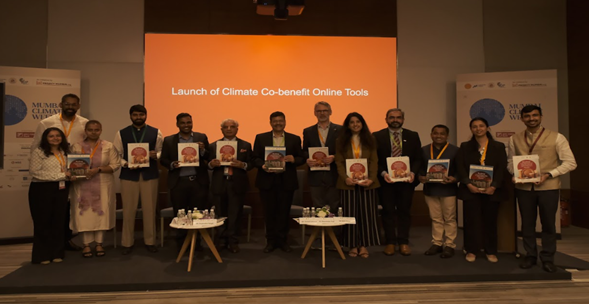
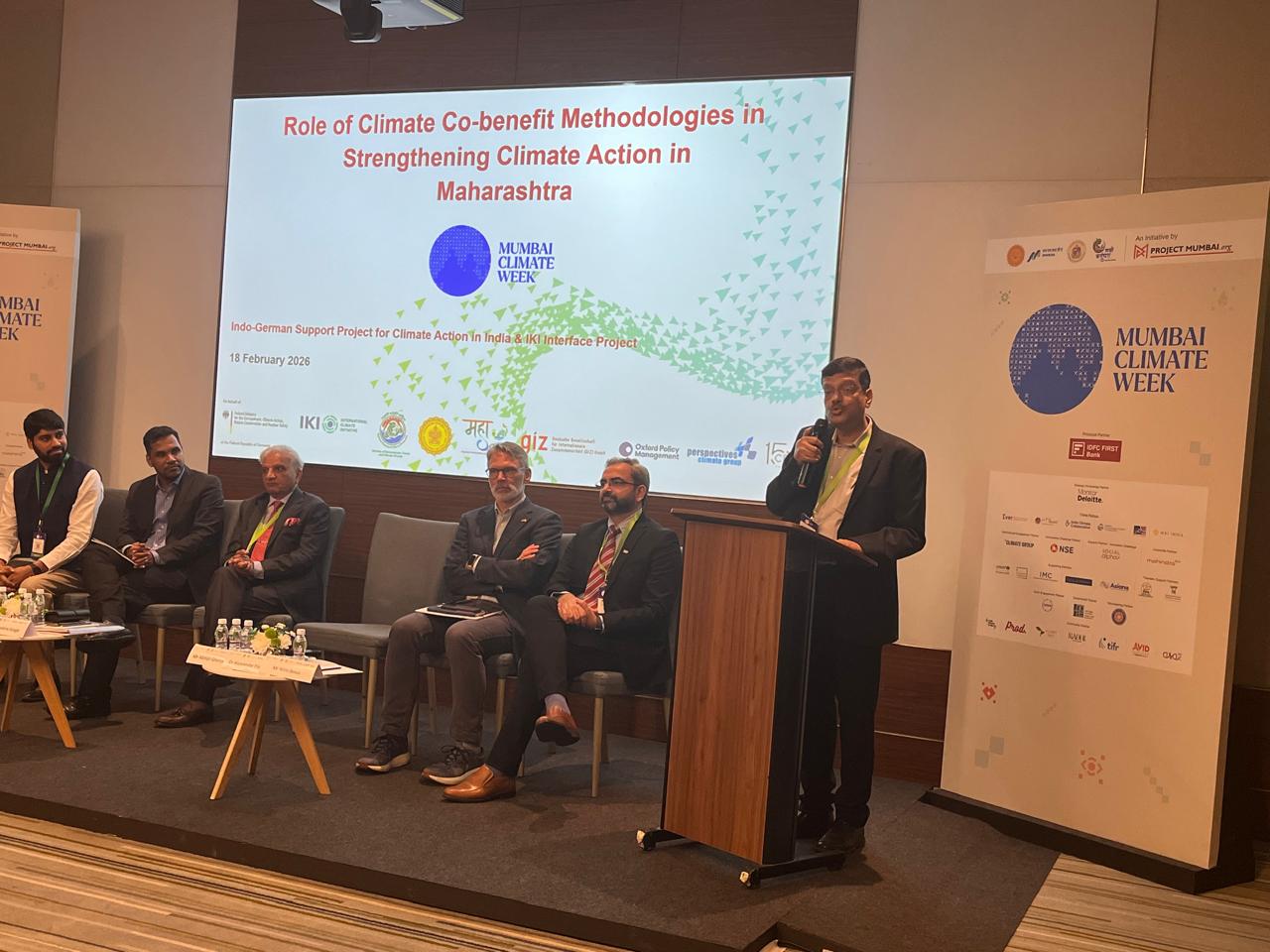
In the state of Maharashtra, the webtools have been integrated within the webpage of Maharashtra State Climate Action Cell for wider use of the state départements and the other interested public and private sector institutions. During the Mumbai Climate Week held on 17-19 February 2026 in Mumbai, GIZ India organised an session on “Role of Climate Co-benefits Methodologies in Strengthening Climate Action in Maharashtra” on 18th February to launch the webtools and the roadmap in collaboration with the Maharashtra State Climate Action Cell, and technical partners Oxford Policy Management Limited, CEEW, and Perspectives Climate Group. The event was attended by officials of State Climate Change Cell, NITI Aayog, National Disaster Management Authority, partner organisations, and delegates of Mumbai Climate Week.
During the session, Shri Abhijit Ghorpade, Director, State Climate Action Cell, Maharashtra Environment and Climate Change Department formally launched the web-based climate co-benefit tool to strengthen the designing, measurement and scaling up of these interventions. This methodology, rooted in science helps Maharashtra assess carbon sequestration from urban forestry and plantation initiatives, avoided emissions linked to reduced production and disposal of single-use plastics, and adaption benefits such as urban cooling, groundwater recharge, flood regulation, and biodiversity improvements. The web-based tool can be accessed from the department webpage using the following link: https://ccob.mahascac.in/
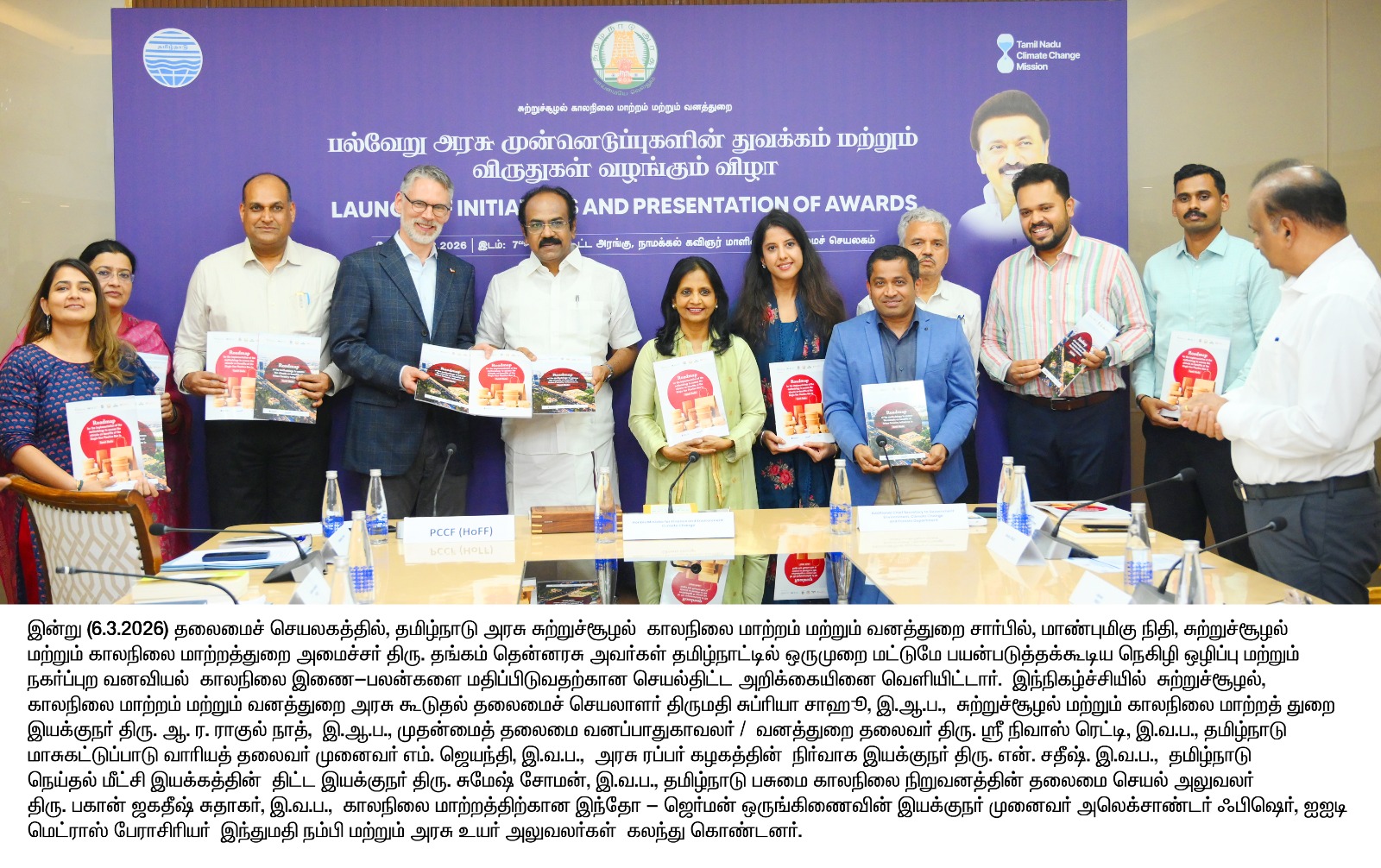
In the state of Tamil Nadu, the roadmaps to integrate the tools at the state level were launched at an event by Honourable Minister of Environment and Climate Change of Tamil Nadu Mr Thangam Thennarasu on 6th March 2026 at the Tamil Nadu State Secretariat. The event was also officiated by the Additional Chief Secretary Ms. Supriya Sahu and other senior officials of state departments of Environment, forest, and State Pollution Control Board.
LeadIT workshop with PSEs for advancing public sector leadership in decarbonization
IKI India Interface Project organised second of the regional workshop with Public Sector Enterprises (PSEs) in collaboration with the Standing Conference of Public Enterprises (SCOPE) in Kolkata on 20th February 2026 to strengthen public sector engagement in the Leadership Group for Industry Transition (LeadIT). The project had organised the first outreach workshop in October 2025 in Delhi. The objective of the workshop was to build awareness on the LeadIT platform for peer learning, global collaboration and access to clean technologies and climate finance and to enhance the capacities of PSEs on industry decarbonization pathways. A total 45 participants from 21 PSEs participated in the workshop.
Sessions covered exchange on opportunities within LeadIT, Technology options and partnerships, financing opportunities, and public-private collaborations. Ms. Rajasree Ray, Economic Advisor and Ms.Ruchika Drall, Deputy Secretary from the Ministry of Environment, Forest and Climate Change (MoEFCC) provided detailed inputs on the LeadIT platform and opportunities available within the platform for peer learning and colloborations with the existing examples of member companies and also addressed the queries from the PSEs.
Ms. Barbara Voss, Consul General, German Consulate, Embassy of Germany from Kolkata highlighted the importance of Indian PSEs in achieving the NDC targets of the country and how German technical cooperation including International Climate Initiative (IKI) is supporting this endeavour with India and Indian PSEs. Ms. Neelima Alam from Département Science Technology discussed ongoing technology collaboration initiatives within the LeadIT platform and other government of India initiatives to promote low carbon technologies for Indian companies. Existing member, Steel Authority of India Limited (SAIL) shared their experiences, while representatives of Climate and Sustainability Initiative presented financing options for decarbonisation investments.
IKI India at the Silver Jubilee edition of the World Sustainable Development Summit (WSDS)
India hosted the Silver Jubilee edition of the WSDS 2026, organised by TERI, with GIZ participating across three key avenues.
Mr. Jochen Flasbarth, State Secretary at Germany's BMUKN, delivered the Ministerial Plenary keynote, underscoring the continued relevance of multilateralism in addressing climate change, biodiversity loss, and environmental degradation — and calling for multilateral frameworks to evolve by delivering on climate finance, technology transfer, and capacity building commitments for developing countries, with the IKI India Interface Function supporting coordination efforts. As part of the WSDS, the Interface Project also co-organised a thematic session, bringing together policymakers, researchers, and practitioners to deliberate on India's dual ambition of achieving Viksit Bharat by 2047 and net-zero emissions by 2070.
The session was informed by and drew on NITI Aayog's recently released suite of 11 analytical reports, covering five key transition dimensions: performance-based building codes (critical given that over 80% of India's 2047 building stock is yet to be constructed), industrial decarbonisation including green hydrogen and carbon capture, utilisation and storage (CCUS), and embedding climate adaptation through vulnerability mapping and climate-proof infrastructure.
Additionally, the project hosted an IKI India information booth, presenting materials on IKI’s global and India-specific work. Participants showed strong interest in funding opportunities, publications, and project activities, leading to valuable exchanges and follow-up enquiries.
Roundtable on India’s Green Transition with BMUKN State Secretary Jochen Flasbarth
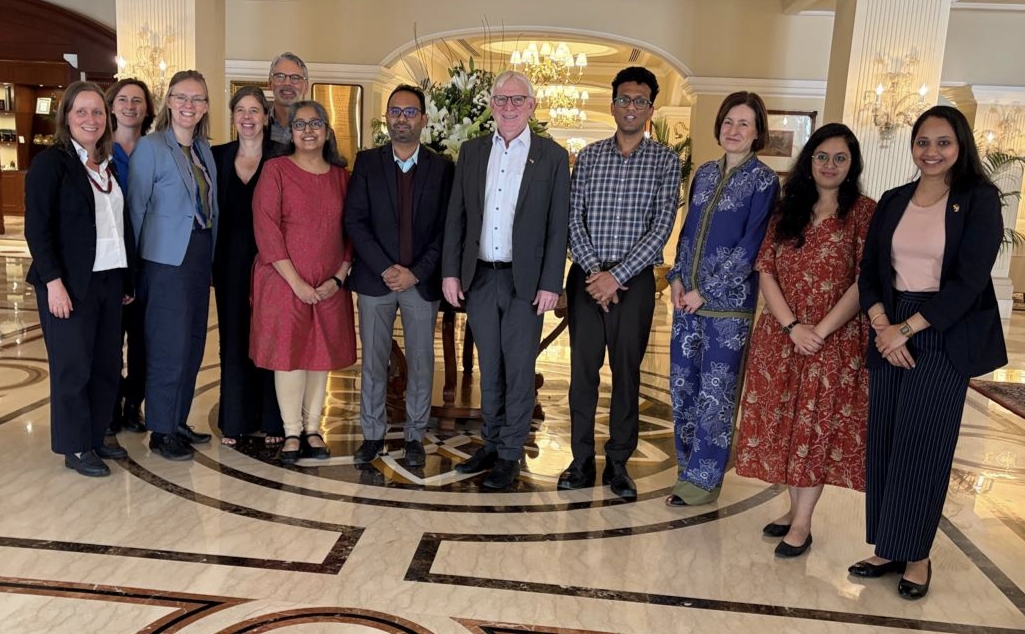
The IKI India Interface Project supported a roundtable discussion with Mr. Jochen Flasbarth, State Secretary at Germany's BMUKN, in February 2026. The discussion focused on India’s pathways to a green transition, with the aim of exploring immediate and medium-term priorities and opportunities to further strengthen Indo-German cooperation. Representatives from Climate Policy Initiative India (CPI India), the Council on Energy, Environment and Water (CEEW), the Kubernein Initiative, and the Centre for Social and Economic Progress (CSEP) contributed perspectives on key topics including climate finance, just transition, water governance, ecosystem-based adaptation, trade-related challenges, and industrial decarbonisation.


Copyright © 2026 All rights reserved