
Urban-Act: Integrated Urban Climate Action for Low-Carbon & Resilient Cities
October-December | 2025Regional
Mitigation of Climate Change
Link To Project: Click Here
The Urban-Act project supported policy dialogue on strengthening building and planning regulations, facilitated international and intergovernmental knowledge exchange on climate-resilient urban planning, built municipal capacity for green and sustainable building practices, and showcased scalable urban solutions on construction and demolition waste management at a national forum.
.jpeg)
Project Updates
Roundtable on Strengthening the Model Building Byelaws (MBBL) and URDPFI Guidelines
On 25th of November, a National-level Roundtable Workshop was held at New Delhi to provide technical advice and recommendations for strengthening the Model Building Bylaws (MBBL) and the Urban and Regional Development Plans Formulation and Implementation (URDPFI) Guidelines.
The roundtable aimed to review the provisions given in the MBBL and the URDPFI Guidelines related to energy efficiency, sustainability and green buildings and discuss ways to integrate Energy Conservation and Sustainable Building Codes (ECSBC/ECSBC-R) and climate-responsive design within these frameworks. Dr Debolina Kundu (Director, NIUA) emphasised the need for integration of the MBBL at the neighbourhood level and the URDPFI guidelines at the national level and how knowledge sharing on good practices from UNESCAP shall be a good reference for local level implementation. The primary objective of this roundtable was to collate all recommendations and harmonize MBBL and URDPFI guidelines to establish a cohesive regulatory framework that links building-level design with city-wide planning to support low-carbon, climate-resilient development.
Workshop on Climate Resilience Interventions
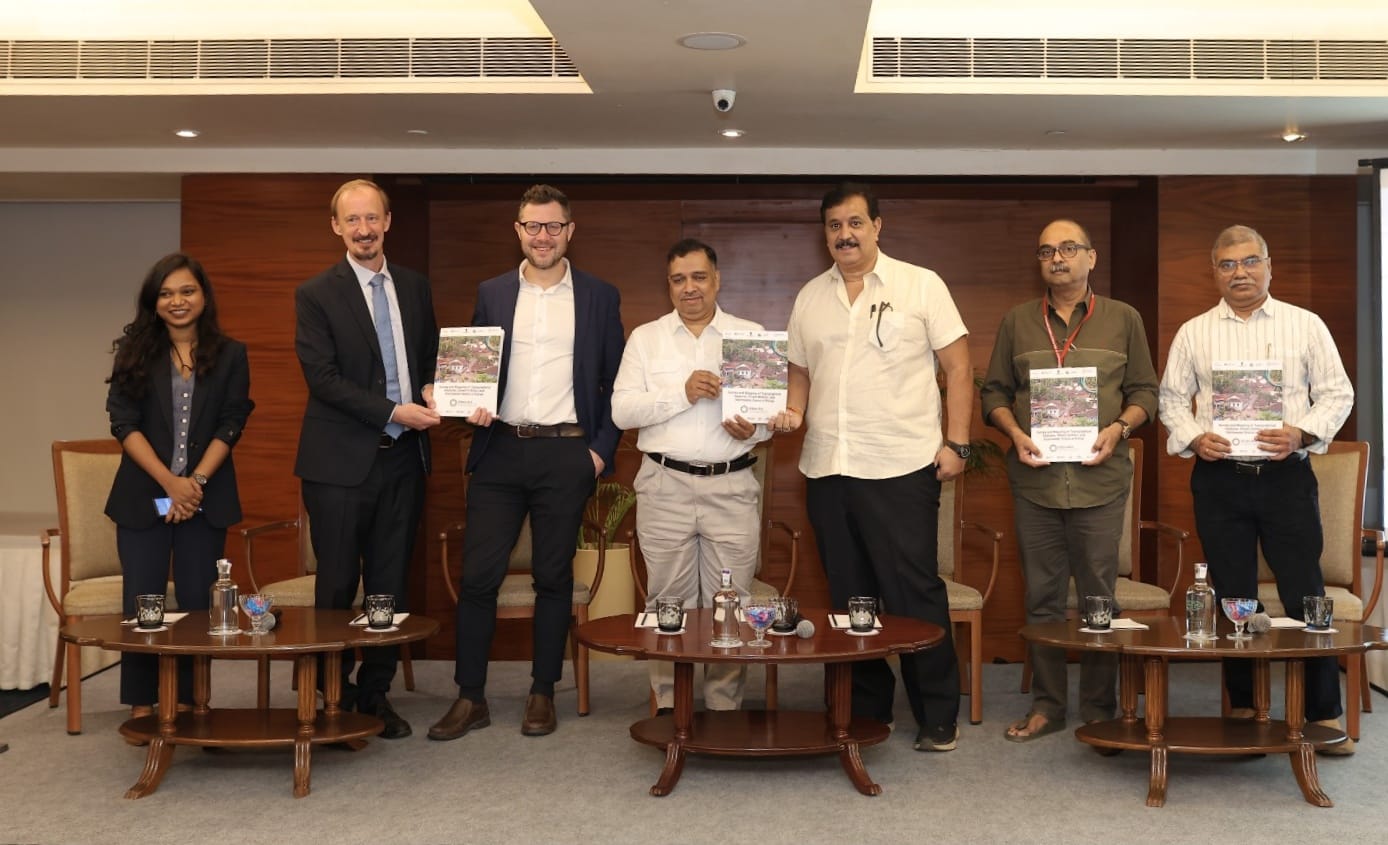
On 19 November 2025, the India component of the GIZ India’s Urban-Act project organised a workshop on climate resilience interventions in Panaji, in collaboration with the Town and Country Planning Department, Goa. The workshop was a joint initiative of the project’s consortium partners, German universities TU Dortmund University and the University of Stuttgart, to foster international knowledge exchange. It brought together representatives from various state departments of Goa, including the Town and Country Planning (TCP) Department, Goa State Climate Change Cell (GSCCC), Goa State Urban Development Agency (GSUDA), State Directorate of Municipal Administration, Goa (DMA) and Urban Local Bodies (ULBs) as well as local NGOs, Resident Welfare Associations, academia and media. Participants collectively deliberated on practical and implementable climate-resilient approaches to urban planning in Goa, with a focus on topographic surveys, climate vulnerability, and mobility.
The workshop also served as the official handover of the final data and outputs of the topographic and street utility survey of Panaji, along with the local climate vulnerability analysis conducted under Urban-Act. Scientific findings related to the local climate vulnerability assessment and rapid assessment of potential climate resilience interventions were presented and jointly reviewed in a participatory mode.
The discussions were led by senior officials including Ms Vertika Dagur (Chief Town Planner, Government of Goa), Dr Pradip V. Sarmokadam (Nodal Officer, Goa Climate Change Cell), Mr Heinrich Gudenus (Project Director, Urban-Act, GIZ), and Mr Sebastian Markart (Project Head, Urban-Act India, GIZ). Several presentations highlighted the topographic and street utility survey data, the vulnerability map, household survey results, and transportation insights from the Imagine Panaji Smart City Development Limited (IPSCDL).
Through rich discussions, the workshop helped to identify practical interventions for Panaji that prioritise climate resilience and produced participatory-based evaluations both of which hold significant potential for future scaling and funding opportunities.
Enhancing Municipal Capacity for Sustainable Building Practices in Coimbatore
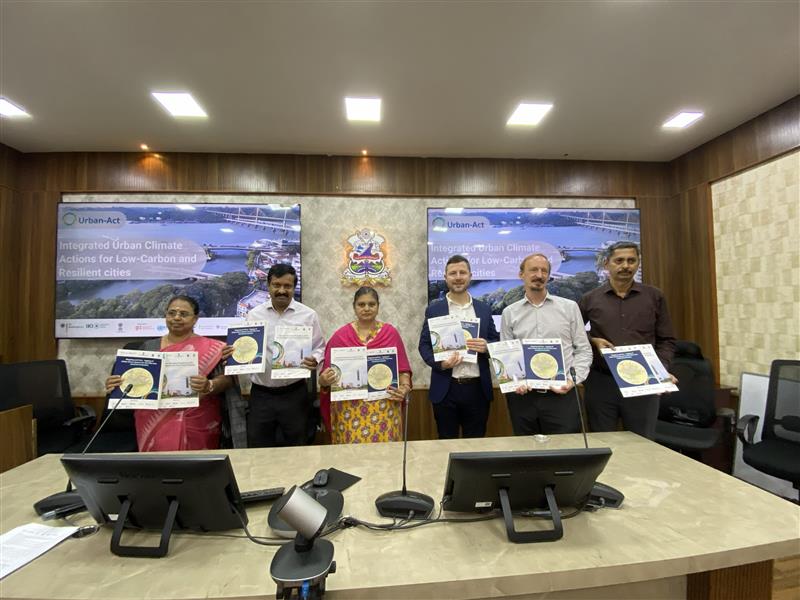
A Capacity Building Workshop on Green and Sustainable Buildings was held on 21 November 2025 at the CCMC Conference Hall, Coimbatore, organised by the Coimbatore City Municipal Corporation (CCMC) under the Urban-Act project. The workshop aimed to strengthen city capacities for integrating green building principles into urban planning and development.
The programme focused on enhancing stakeholder understanding of green building concepts and their climate-resilience benefits, demonstrating how case studies can inform the integration of green provisions into building bye-laws and urban policies, and fostering coordinated dialogue across planning, engineering, building control, and environmental departments.
Led by Ms K. Ranganayaki, Hon’ble Mayor of Coimbatore, Sebastian Markart, Project Head, Urban-Act India (GIZ), and Heinrich Gudenus, Project Director, Urban-Act (GIZ), the programme featured expert presentations by GIZ and ICF Consulting on urban green space mapping, green building rating systems, and energy-efficient, climate-responsive urban development.
The workshop enhanced municipal and stakeholder capacity to apply green building concepts within local policies and practices, promoted inter-departmental coordination, and identified practical next steps through case studies and discussions. The Urban Green Spaces Mapping Report and SOP were also formally launched to support implementation.
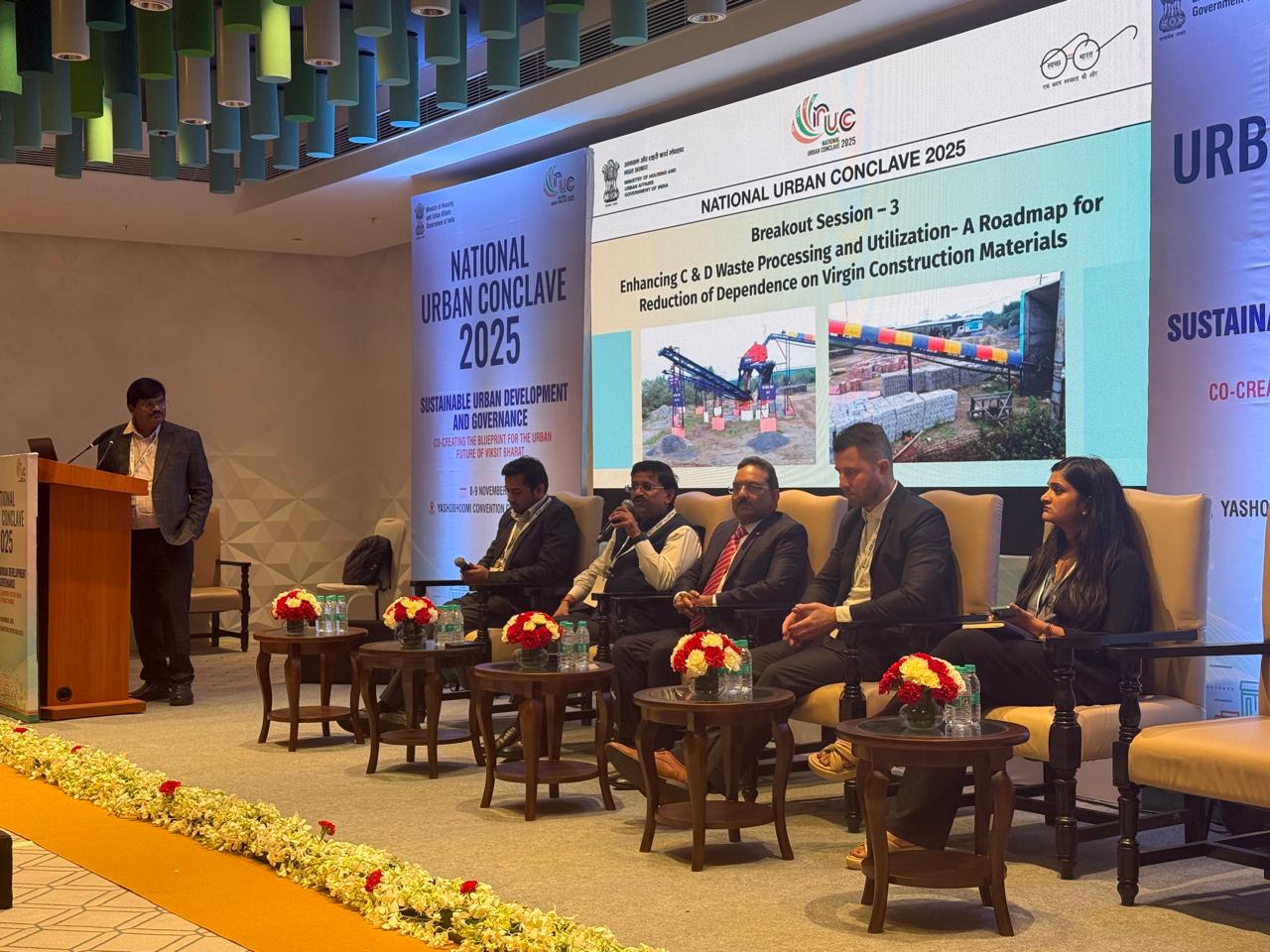
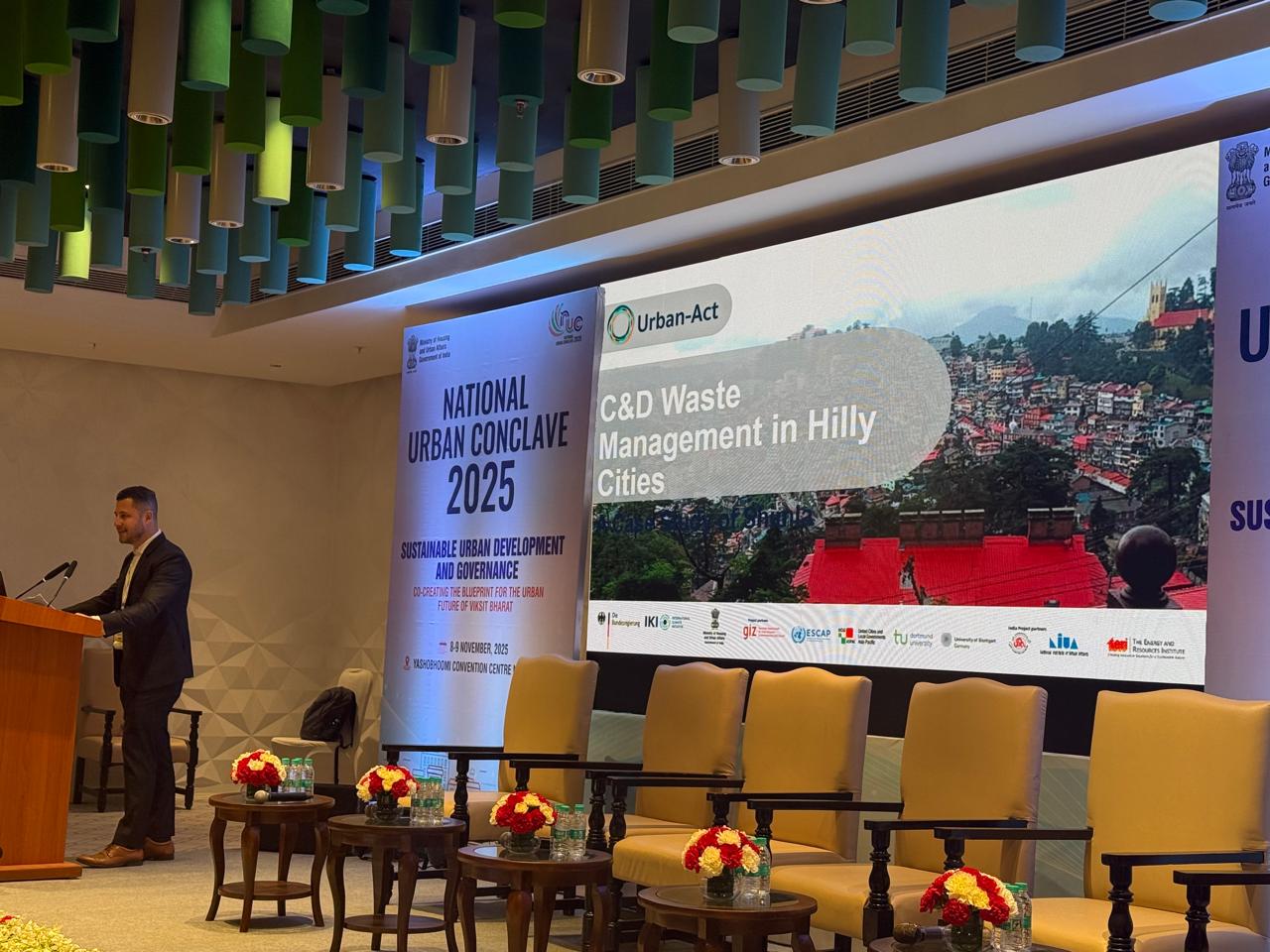
Urban-Act Showcases Shimla’s C&D Waste Management Model for Hilly Cities at MoHUA’s National Urban Conclave 2025
Ministry of Housing and Urban Affairs, Govt. of India organised National Urban Conclave 2025 at New Delhi on 8-9 November, 2025. The two-day conclave brings over 2500 participant from various domains, including policymakers, urban planners, experts, and stakeholders to deliberate on the theme “Sustainable Urban Development and Governance” through intensive brainstorming sessions across six thematic areas.
Mr. Sebastian Markart, Project Head (Urban Act in India), GIZ India presented the case study of Construction and Demolition (C&D) waste management Plant in Shimla City during the event. The project has supported Shimla city with baseline assessment, identifying the key hotspots and devising a management plan. Based on the local learnings, Urban Act project is supporting development of a National Handbook for C&D Waste Management in Hilly Areas. This handbook will not only support Indian Himalayan States but will be useful for countries like Nepal and Bhutan for managing C&D waste in fragile Himalayan region.


Copyright © 2026 All rights reserved