Wetlands Management for Biodiversity and Climate Protection
October-December | 2025Bilateral
Protection of Biodiversity
Link To Project: Click Here
The Wetlands project strengthened integrated wetland governance through district-level management planning in Jammu and Kashmir, facilitated national and regional knowledge exchange aligned with biodiversity and climate frameworks, supported the launch of key wetland and peatland policy publications, and advanced community participation and public–private partnerships for wetland conservation and implementation.

Project Updates
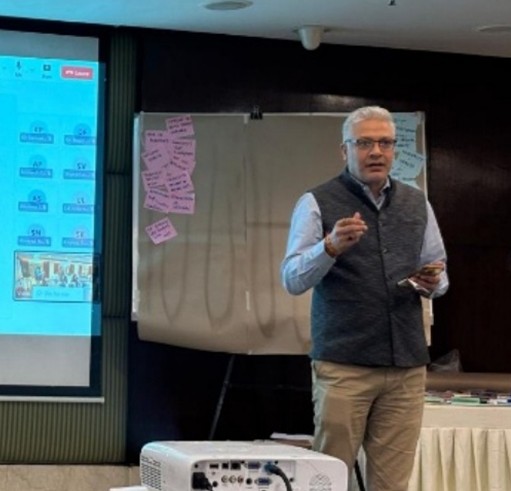
6-7 October 2025, Srinagar, Jammu & Kashmir (J&K)
Supporting District-level Integrated Management Planning in Kashmir for Wetlands Outside Protected Areas
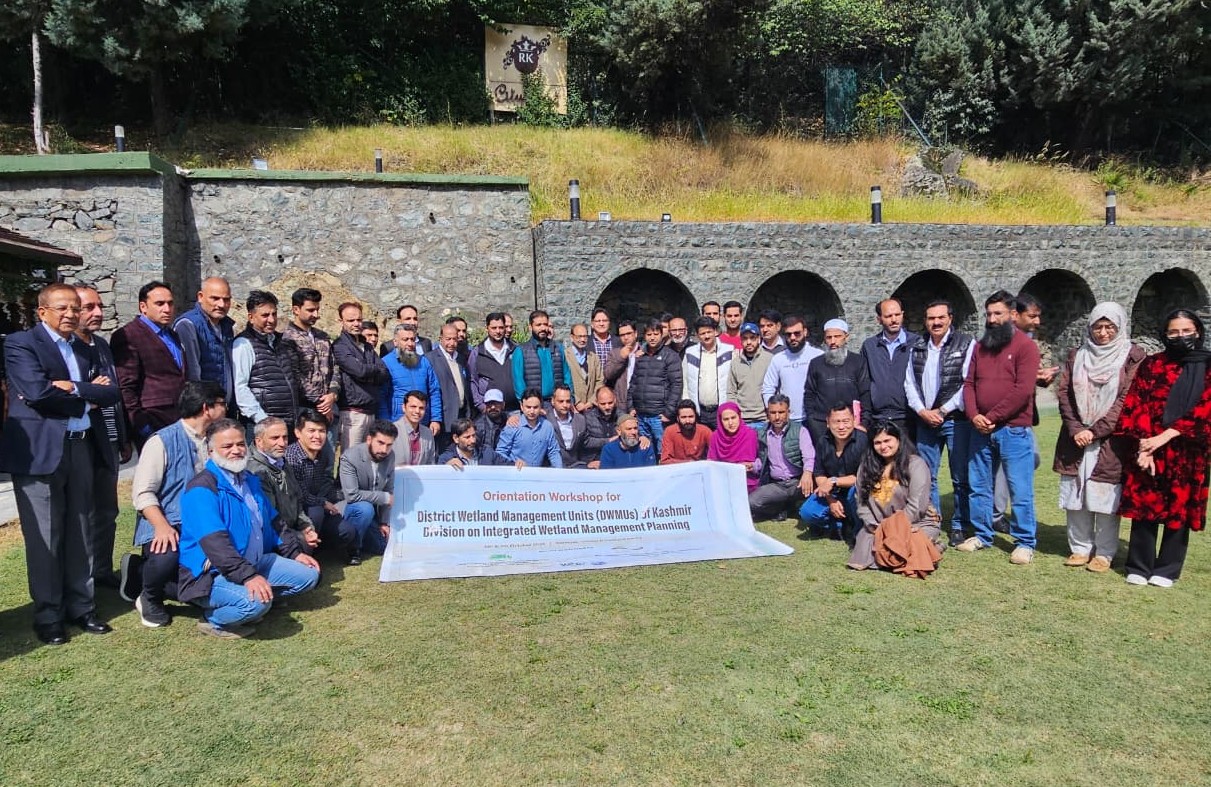
A two-day workshop on Integrated Wetland Management Planning was organised on 6 & 7 October 2025 in Srinagar by J&K Department of Ecology, Environment & Remote Sensing (DEERS) and J&K Wetland Authority, in collaboration with ‘Wetlands Management for Biodiversity and Climate Protection’ project, implemented by Deutsche Gesellschaft für Internationale Zusammenarbeit GmbH (GIZ) with the Ministry of Environment, Forest and Climate Change (MoEF&CC) with support of International Climate Initiative (IKI).
The project supported J&K Government with constituting District Wetland Management Units (DWMUs) as a new institutional structure for cross-sectoral coordination at district level, with the mandate to conserve and manage wetlands outside protected areas - a key gap which was leading to decline of these wetlands. All 10 recently constituted DWMUs of Kashmir Division were provided an orientation on integrated management of wetlands in the two-day workshop. Along with technical sessions and exchange with local experts & wetland champions, each district worked hands-on to develop key planning and monitoring documents for a priority wetland in their district.
Lessons and takeaways from ‘Wetlands Management for Biodiversity and Climate Protection’ IKI project
Wetlands secure our water, shelter rich biodiversity, support local livelihoods, and act as natural buffers against climate impacts. These quiet climate heroes protect people and nature in ways we often notice only once they are gone.
Since 2018 the IKI project ‘Wetlands Management for Biodiversity and Climate Protection’, implemented by GIZ in partnership with the Indian Ministry of Environment, Forest and Climate Change (MoEF&CC), has been strengthening governance, piloting nature-based interventions, promoting citizen engagement and supporting communities who deeply depend on these vivid ecosystems.
On 28.11.2025, the project brought together more than 80 stakeholders working on wetland management across India to pause, reflect and look ahead. Participants included representatives from MoEF&CC, state and Union Territory wetland authorities, site managers, knowledge partners, research institutions, civil society organisations, and the private sector. The discussions explored what worked well, the lessons gained along the way, and how proven solutions can be scaled across India and beyond.
- Integrated Wetland Management delivers tangible benefits for biodiversity, climate, and livelihoods, but only when backed by strong collaboration and long-term commitment.
- Local governments, communities, and research partners play a central role in nurturing sustainable stewardship that reflects local priorities and realities.
- Uniting public, private, and civil-society actors helps build the pathways needed to sustain action and scale impact over time.
Project experiences demonstrated how management planning, digital platforms, evidence-based tools, community engagement, and private sector partnerships can strengthen wetland governance and support implementation in line with national biodiversity and climate priorities (India’s NDC and updated NBSAP) under the UNFCCC, CBD and the Sustainable Development Goals.
Regional Workshop on Conservation and Wise Use of Wetlands under Mission Sahbhagita for Northern States of India
As an integral part of the knowledge partner network of the Ministry of Environment, Forest and Climate Change (MoEF&CC), the Wetlands Management for Biodiversity and Climate Protection project participated in the ‘Regional Sahbhagita Workshop for Conservation of Wise Use of wetlands in Northern States’ held during 30th and 31st October 2025 in Shimla, Himachal Pradesh. The workshop saw participation from the States and UTs namely, Chandigarh, Delhi, Haryana, Himachal Pradesh, Ladakh, Jammu and Kashmir, Punjab, Uttar Pradesh, and Uttarakhand.
The project members delivered a session on aligning wetlands programme to the 5th Ramsar Strategic Plan and India’s updated National Biodiversity Strategy and Action Plan (NBSAP) 2024-2030. This session explored how MoEFCC’s national wetlands programme is expected to contribute for achieving the updated National Biodiversity Targets (2024–2030) under India’s National Biodiversity Strategy and Action Plan, while identifying emerging priorities and expectations for its effective implementation. The discussion also highlighted how the project demonstrated a whole-of-society approach through its interventions in participatory management planning and wetlands-based livelihood enhancement.
Publications launched during the workshop:
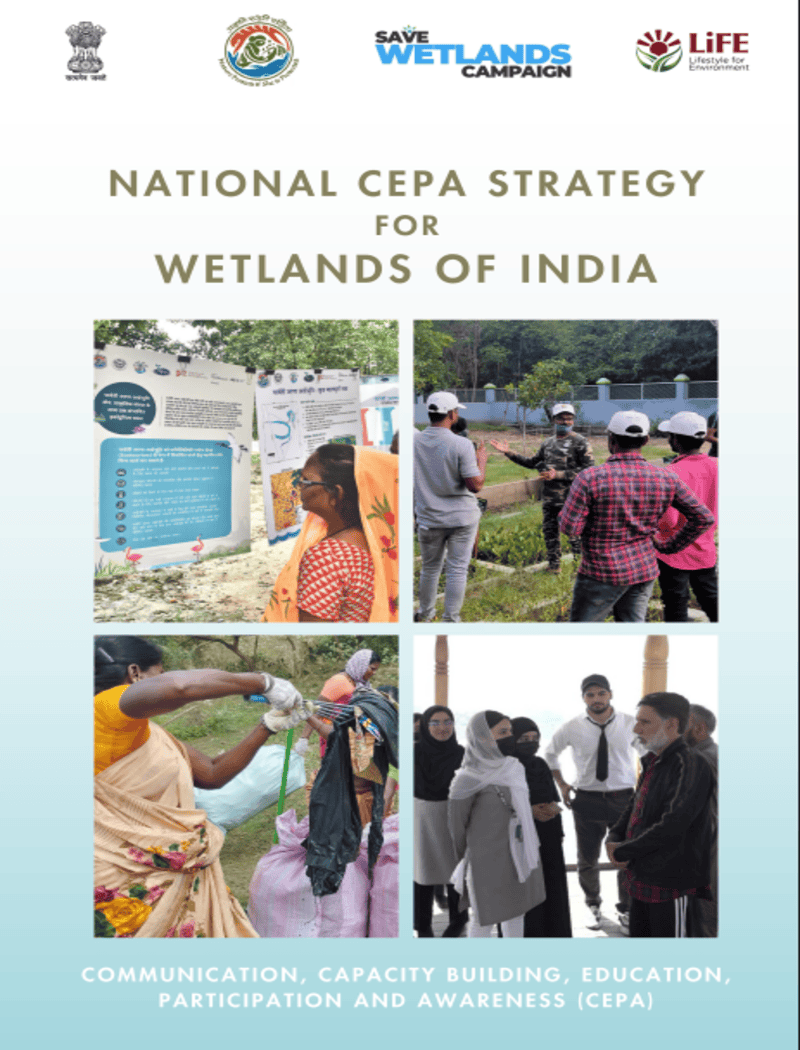
National CEPA Strategy for Wetlands of India
Taking the whole-of-society approach forward, MoEF&CC in collaboration with GIZ and other knowledge partners have developed ‘National CEPA Strategy for Wetlands of India’. Aligning with the Ramsar Convention Resolution XIV.8, this document outlines a comprehensive framework to strengthen Communication, Capacity building, Education, Participation, and Awareness (CEPA) for wetland conservation. It builds upon experiences from CEPA pilot projects implemented across different states and provides guidance for States and UTs to develop their own CEPA action plans, fostering community-led conservation and advancing the whole-of-society approach.
Peatlands of India: An overview and Future Roadmap
The publication “Peatlands of India: An Overview and Future Roadmap” marks a landmark step in India’s environmental management efforts. Developed by the MoEF&CC in collaboration with GIZ and WISA, it presents the country’s first comprehensive assessment of peatlands, ecosystems vital for carbon storage and climate regulation. It provides a scientific foundation for region-specific conservation and outlines a roadmap to integrate peatlands into India’s broader climate and wetland management strategies.
Roundtable: Building Partnerships and Strengthening Community Participation in Jammu & Kashmir on Wetland Management
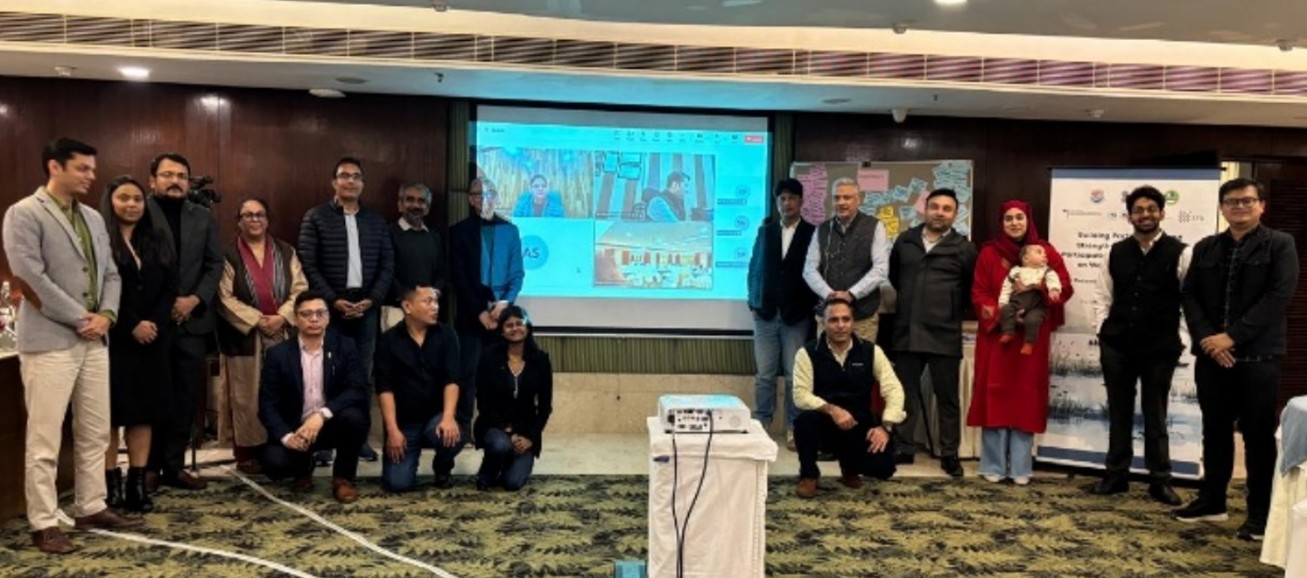
A roundtable on “Building Partnerships and Strengthening Community Participation in Wetland Management in Jammu & Kashmir” convened on 15th December 2025 in a hybrid format. The event was organised by STS Global in collaboration with GIZ as part of the IKI project on ‘Wetlands Management for Biodiversity and Climate Protection’ in India and saw participation from wetland managers and authorities of J&K, civil society organisations, and the private sector.
The objective of the roundtable was to transition from planning and awareness to implementation by exploring public-private partnership models, financing pathways, institutional mechanisms, and technology enablers for operationalising the ‘J&K Citizen Engagement Strategy for Wetland Conservation and Wise Use’ on the ground. The IKI project also introduced WetCAP (Web-enabled Tool for Conservation Action and Partnerships) as an interactive digital platform that bridges the gap between wetland managers and private sector, enabling effective wetland conservation while unlocking investment opportunities.
The roundtable concluded with a shared understanding that effective wetland conservation in Jammu & Kashmir requires integrated governance, innovative financing, enabling technology, and structured public-private-community partnerships. Key actionable takeaways focused on private sector support towards wetland interpretation centres, technology support for monitoring and technical support for rapid management planning. Such entry point activities will be listed by J&K wetland managers on WetCAP to enable private entities to clearly identify areas for engagement.


Copyright © 2026 All rights reserved