Indo-German Support Project for Climate Action in India
October-December | 2025Bilateral
Mitigation of Climate Change
Link To Project: Click Here
The IKI India Interface Project advanced policy dialogue ahead of COP30, facilitated portfolio learning and a Monitoring, Evaluation and Learning review, supported public sector leadership on decarbonisation, strengthened climate co-benefit methodologies and capacity building, promoted low-carbon cement innovation, engaged in biodiversity policy dialogue, and delivered India’s first nationwide peatland inventory.


Project Updates
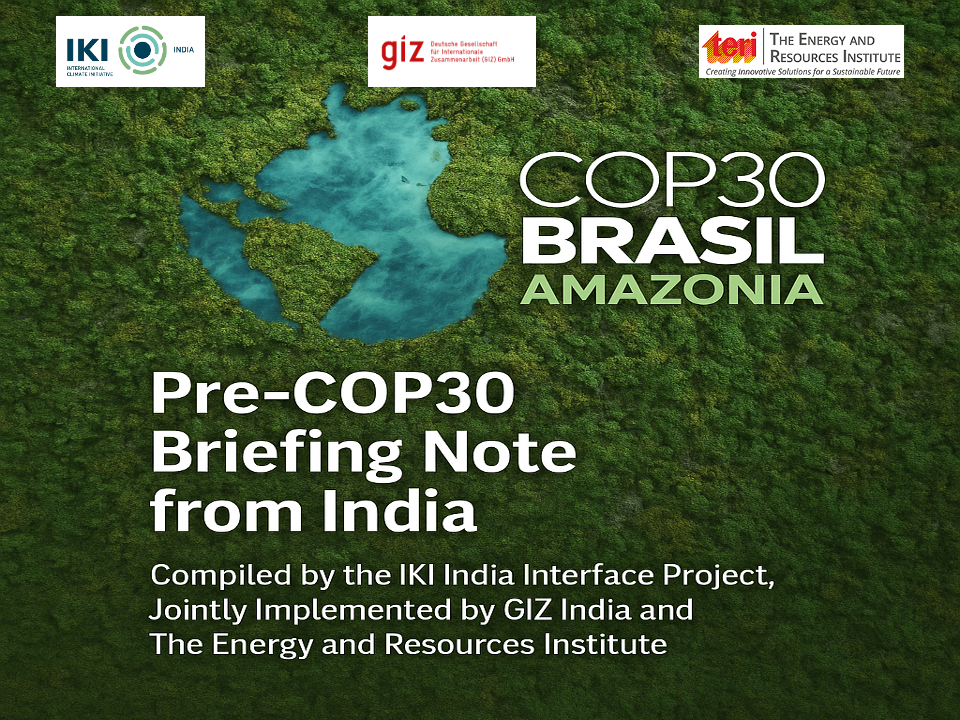
Pre-COP30 Briefing Note from India
In November 2025, the IKI India Interface Project and TERI published the Pre-COP30 Briefing Note from India to inform technical audiences ahead of COP30 in Belém. The note synthesises India’s climate commitments and recent progress – alongside an outlook on the forthcoming 2035 NDC – and provides a structured update on India’s National Adaptation Plan (NAP) and other policy and market developments relevant to NDC implementation. It also features an expert interview reflecting on key expectations and priorities for COP30, and concludes with a COP30 delegation list from India plus IKI-related announcements for India. Know more.
IKI IND Community Exchange 7
The 7th IKI India Community Exchange, held on 3 December 2025 at the India Habitat Centre in New Delhi, brought together IKI India projects to exchange on developments across the IKI India portfolio, general updates from IKI, lessons from the IKI India Networking Workshop, current funding opportunities under the open IKI calls, outcomes from COP30 and 2 focused project presentations. The exchange provided a snapshot of the evolving IKI India portfolio, introduced revised IKI branding and website features, and offered practical guidance on the India-specific Large Grants call. Two project spotlights on wetlands governance and smart, climate-friendly logistics showcased their best practices and implementation approaches.
IKI India MEL Workshop
In December 2025, the IKI India Interface Project organised a Monitoring, Evaluation and Learning (MEL) workshop as part of a broader MEL review grounded in desk research and stakeholder interviews. The workshop served to validate and refine the findings and assessed how effectively the Interface supports governance and administrative processes, portfolio learning and synergies, communication and guidance, and the coordination and alignment of expectations between Indian and German stakeholders within its mandate. The results are planned to be used to further strengthen the effectiveness of the IKI Interface in India.
LeadIT workshop with PSEs for advancing public sector leadership in decarbonization
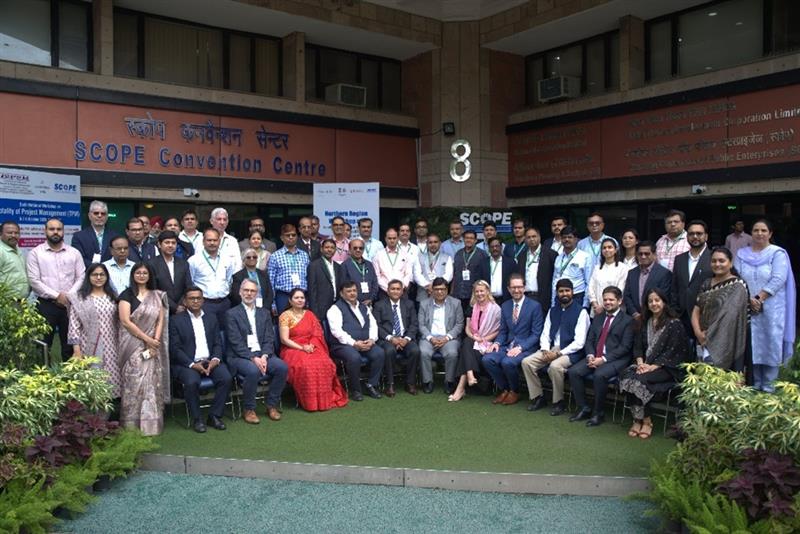
IKI India Interface Project partnered with the Standing Conference of Public Enterprises (SCOPE) to organise a regional workshop in New Delhi on 8th October 2025 to strengthen public sector engagement in the Leadership Group for Industry Transition (LeadIT). The workshop marked the first in a planned series to encourage Public Sector Enterprises (PSEs) to join the global platform co-launched by India and Sweden, in which Germany is also a member. The workshop highlighted how LeadIT can support peer learning, global collaboration and access to clean technologies and climate finance. Thirty-seven participants from public and private sector companies, ministries, financiers and technology providers took part.
Representatives from the Indian Ministry of Environment, Forest and Climate Change (MoEFCC) and the LeadIT Secretariat introduced the platform and addressed questions from participants. Existing members such as Steel Authority of India Limited (SAIL) and Tata Motors shared their experiences, while KfW presented financing options for decarbonisation investments. Several PSEs—including Bharat Heavy Electricals Limited (BHEL), Gas Authority of India Limited (GAIL), National Thermal Power Corporation (NTPC) and National Buildings Construction Corporation Limited (NBCC)—showcased their ongoing sustainability initiatives.
A concrete example of innovation supported through IKI cooperation was presented by JK Cement, which highlighted India’s first commercial launch of LC3 cement, developed with support from IIT Delhi under the IKI Interface Project.
Finalizing of Climate Co-benefit Methodologies and capacity building of key stakeholders
The climate co-benefit (CCOB) methodologies for urban forestry and Single-Use Plastic (SUP) Ban policy were finalised in collaboration with the pilot states of Maharashtra and Tamil Nadu during the reporting period. Two state-level consultation workshops were organised with government officials in Tamil Nadu to validate both methodologies. The methodologies were also presented to MoEFCC for review and feedback, following which they were finalised.
To support implementation, two training modules—one for each methodology—were developed to build the capacity of key stakeholders and facilitate integration into government and PSE initiatives. Four training programmes were conducted in December 2025 for state officials from forest departments, urban local bodies, pollution control boards, and other relevant departments in both pilot states to build the capacities of states on using the methodologies. Additionally, a dedicated training programme on the urban forestry CCOB methodology was organised for PSE officials at IIFM, Bhopal, on 12 December 2025, with the objective of institutionalising the methodology within PSEs.
The training modules are being converted into Massive Open Online Courses (MOOCs) and integrated into the Government of India’s capacity-building portal iGOT–Karmayogi, enabling long-term institutional capacity development. The methodologies will also be integrated into the web portals of MoEFCC and the respective pilot state governments.
Experience Sharing workshop on the work of LC3 by IIT Delhi
IIT Delhi organised an experience-sharing and outreach workshop on 15 December 2025 to disseminate learnings from its research on LC3 cement among public and private sector stakeholders. The workshop showcased experiences from commercial-scale production of LC3 cement at JK Cement’s Rajasthan plant, as well as its application at a construction site in Mumbai by the Lodha Group. Initial research findings on the performance of LC3 cement under harsh conditions and the use of solar energy in cement production were also discussed. Under the IKI Interface Project, IIT Delhi continues to support research, upscaling, and deployment of innovative low-carbon cement technologies in India, using a climate co-benefit approach.
IKI India Interface Project at the Biodiversity Dialogue 2025
The Biodiversity Dialogue 2025 was held on 9 October 2025 and brought together representatives from BMUKN, BMWE and GIZ India to discuss recent biodiversity-related developments. The dialogue covered the status of India’s National Adaptation Plan (NAP) and the revised National Biodiversity Strategy and Action Plan (NBSAP), including timelines for national reporting. Additional topics included India’s engagement in international processes, upcoming milestones in multilateral fora, and institutional and procedural aspects related to biodiversity policy implementation.
India’s Peatland Mapping Initiative
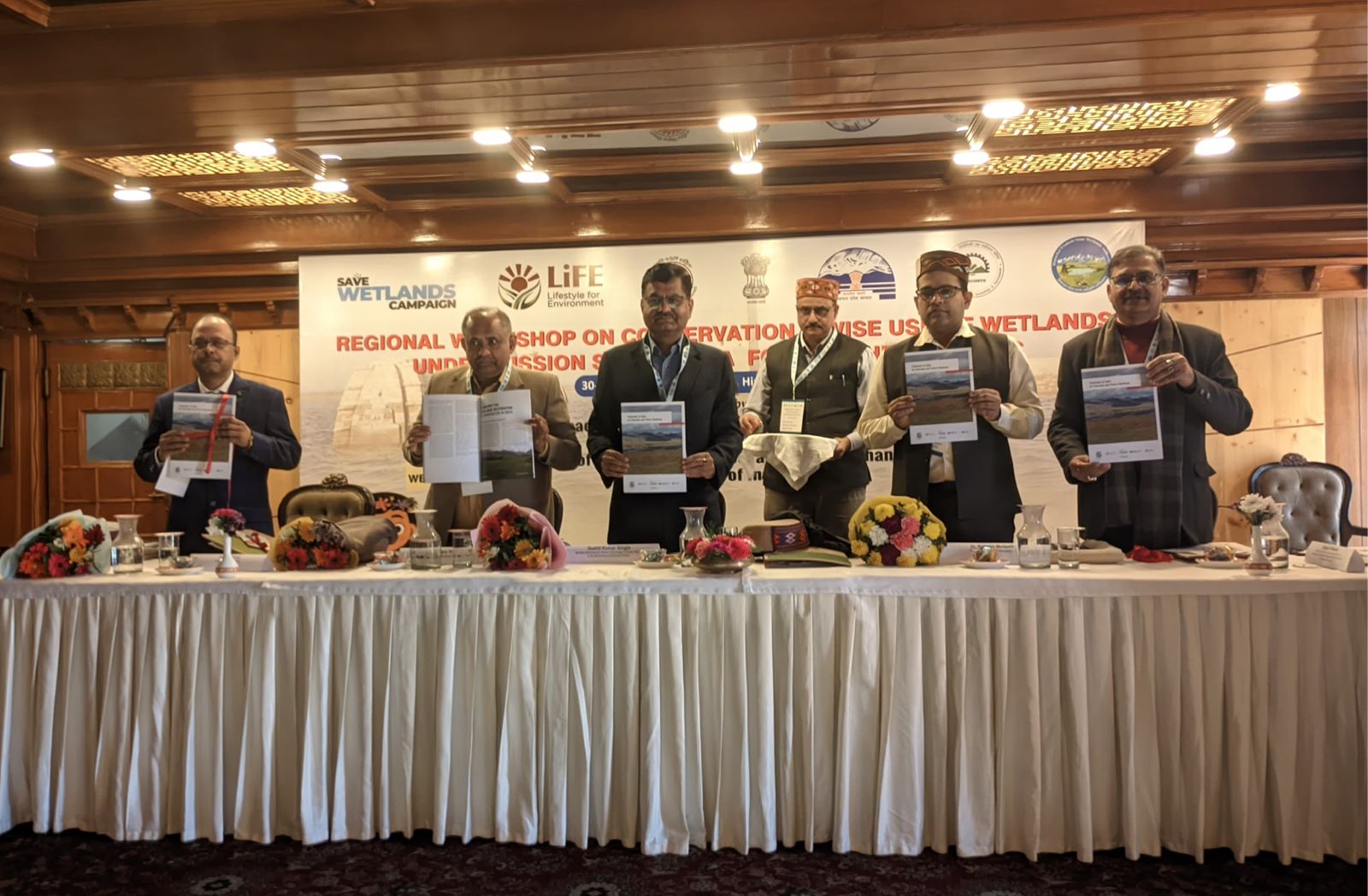
Under the IKI Interface Project, India has completed its first nationwide peatland inventory in collaboration with Wetlands International South Asia. Using probabilistic modelling combined with field validation across 70 sites in 10 states, the assessment mapped potential peatland areas and estimated their carbon storage potential. Results indicate significant variation across India’s major biogeographic regions, with the highest median carbon stocks in the Himalayas (around 92 tonnes per hectare). Field investigations revealed substantial site-level variability, including peat depths of up to four metres in Hokersar, Jammu and Kashmir, and carbon content ranging from 19–42%, while sites such as Tso Kar in Ladakh recorded carbon content between 7–31%. Together, these findings provide India’s first evidence base to guide peatland restoration and policy integration, strengthening the country’s leadership in nature-based climate action. The results have been compiled in Peatlands of India: An Overview and Future Roadmap, released at the regional workshop held in Shimla on 30 October 2025. (Peatlands of India: An Overview and Future Roadmap)


Copyright © 2026 All rights reserved