India Sustainable Mobility Initiative
January-March | 2026Bilateral
Mitigation of Climate Change
Link To Project: Click Here
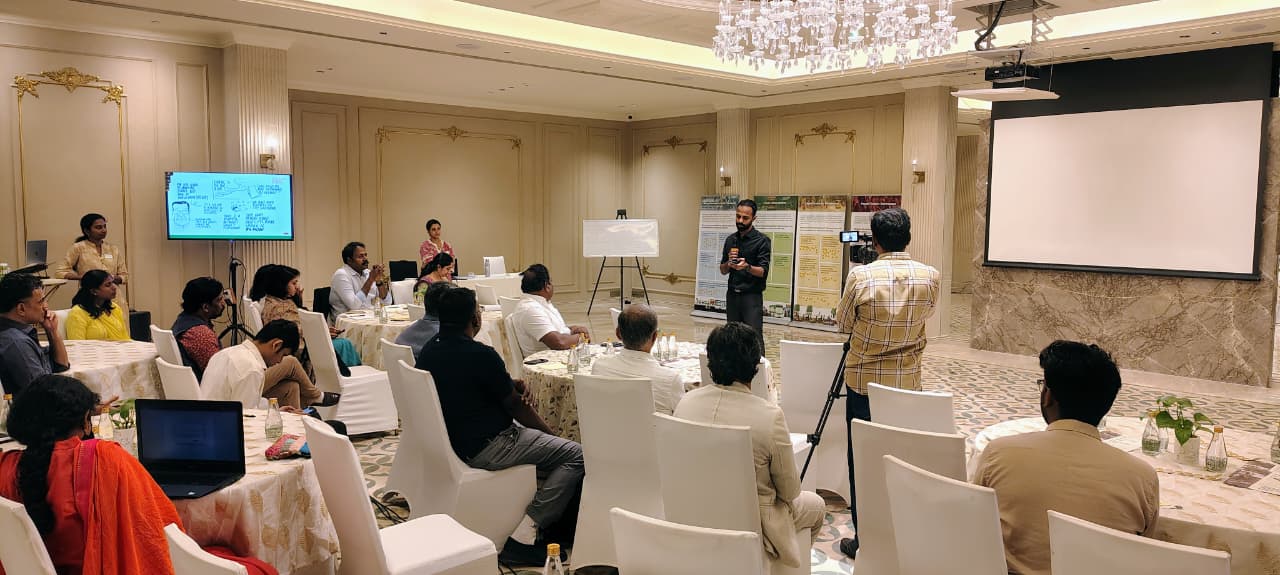
This quarter saw sustainable urban mobility work move forward across multiple fronts – from city partnerships and state-level planning to public transport improvements, street design, and research for cycling infrastructure implementation.

Project Updates
Sustainable Urban Mobility and Public Transport Decarbonisation
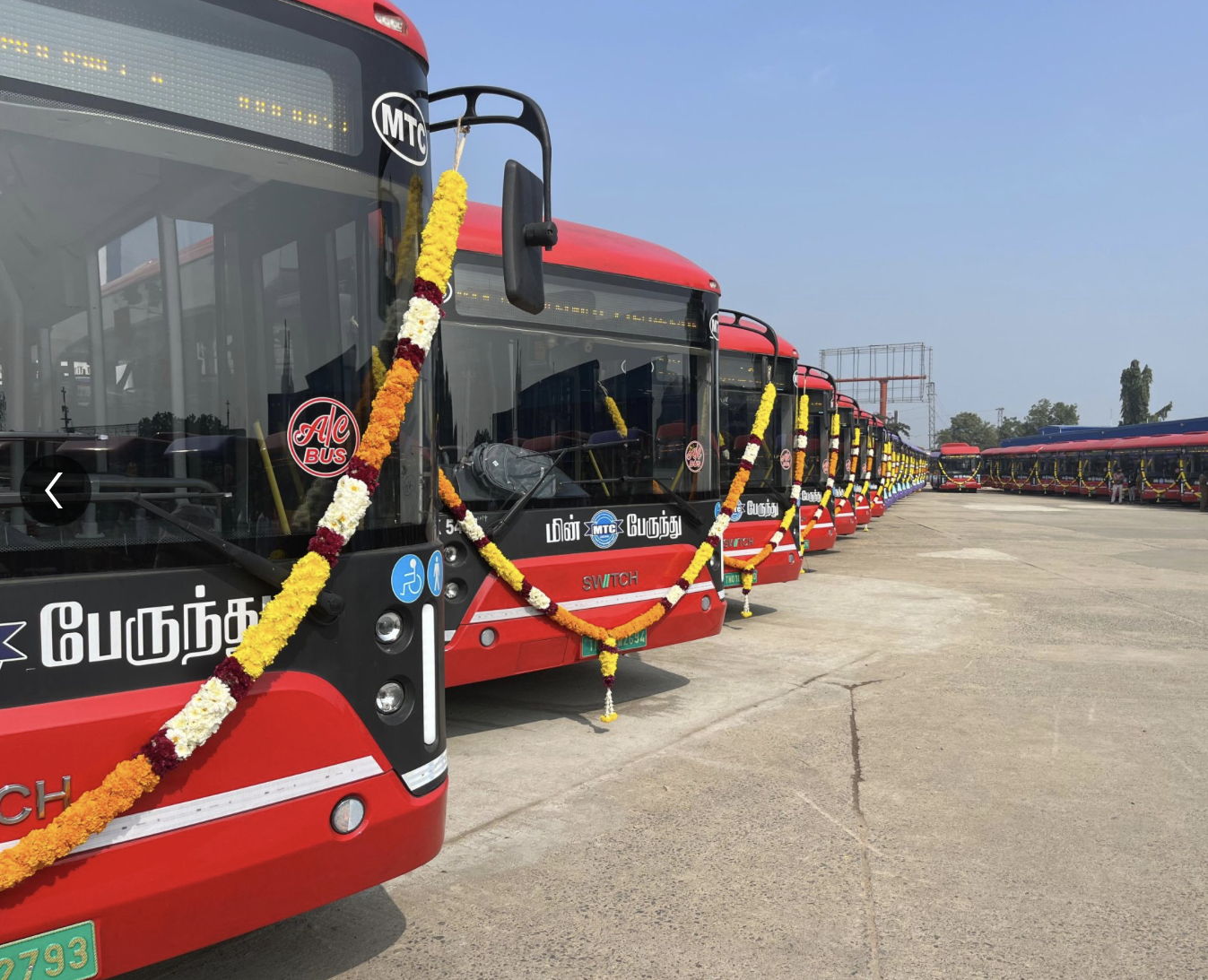
Chennai Electric Bus Fleet Expansion
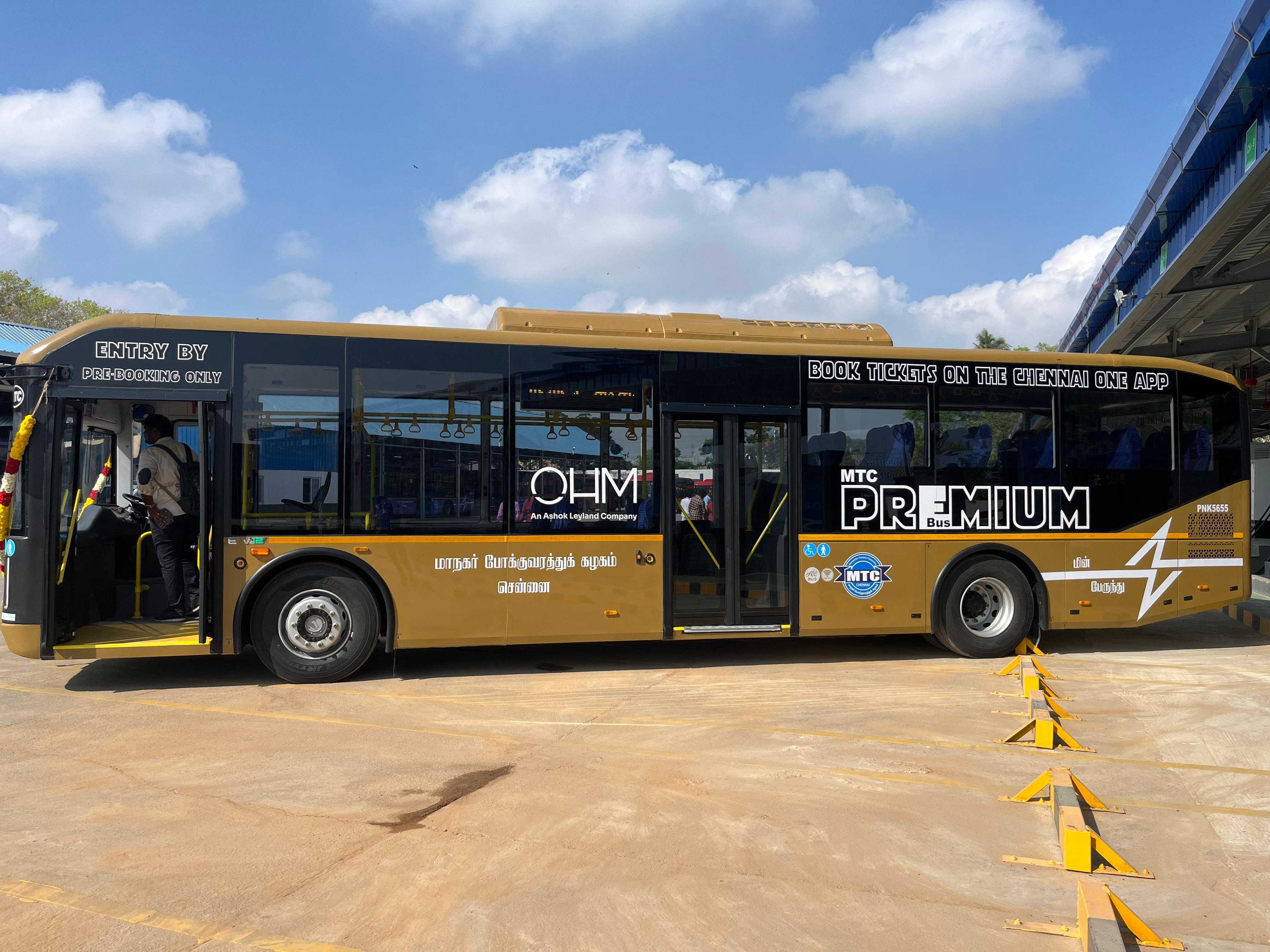
ITDP partnered with the Metropolitan Transport Corporation (MTC) to support Chennai’s electric bus rollout. Following the induction of 400 electric buses in early 2025, another 125 e-buses were added in December 2025, followed by 10 premium e-buses in March 2026. This marks the city’s first large-scale e-bus deployment. In January 2026, MTC also introduced 10 Pink Buses on five routes, offering free travel for women and operated by all-women crews to strengthen the inclusivity and accessibility of public transport services.
Reaching Your Riders: National Bus Communications Initiative
In January 2026, ITDP and GIZ India, with support from the Ministry of Housing and Urban Affairs (MoHUA), launched Reaching Your Riders, a national initiative to strengthen communications and marketing within public bus systems. The programme is supporting ten State Transport Undertakings (STUs) to improve passenger information and ridership confidence, contributing to stronger public transport uptake and long-term mode shift.
Tamil Nadu’s Urban Mobility Priorities 2031
On January 28, 2026, a coalition of organisations under the Sustainable Mobility Network (SMN) released Tamil Nadu’s Urban Mobility Priorities 2031 – a roadmap outlining key actions to advance sustainable and inclusive mobility across the state. Developed with ITDP and other partners, the document draws on insights from Tamil Nadu cities. ITDP helped shape the roadmap, which prioritises stronger public transport, clean mobility, safer walking infrastructure, and people-centred governance to guide statewide decisions through 2031.
Walking and Cycling Infrastructure
Chennai's First Pedestrian Priority Street
ITDP provided technical inputs for the redesign of Khader Nawaz Khan Street, inaugurated by Tamil Nadu's Chief Minister, M.K. Stalin on 05 February 2026; featuring wider footpaths, traffic calming, organised parking, and improved lighting, . ITDP also piloted an interactive audio walk to showcase the project's impact.
ITDP examined barriers to everyday cycling in Indian cities
ITDP conducted a multi-city study called Cycling in Our Cities. The study assessed 152 km of cycle lanes and surveyed 605 cyclists and non-cyclists across Pune, Pimpri Chinchwad, and Nagpur. Findings highlighted obstructions like parked vehicles as the most common deterrent to bike lane use. Cyclists also mentioned traffic calming measures and continuous lanes as other important factors. Cycling in Our Cities emphasizes the need for stronger enforcement and maintenance of infrastructure and the importance of essential connected networks.
Institutional Partnerships for Long-term Transitions
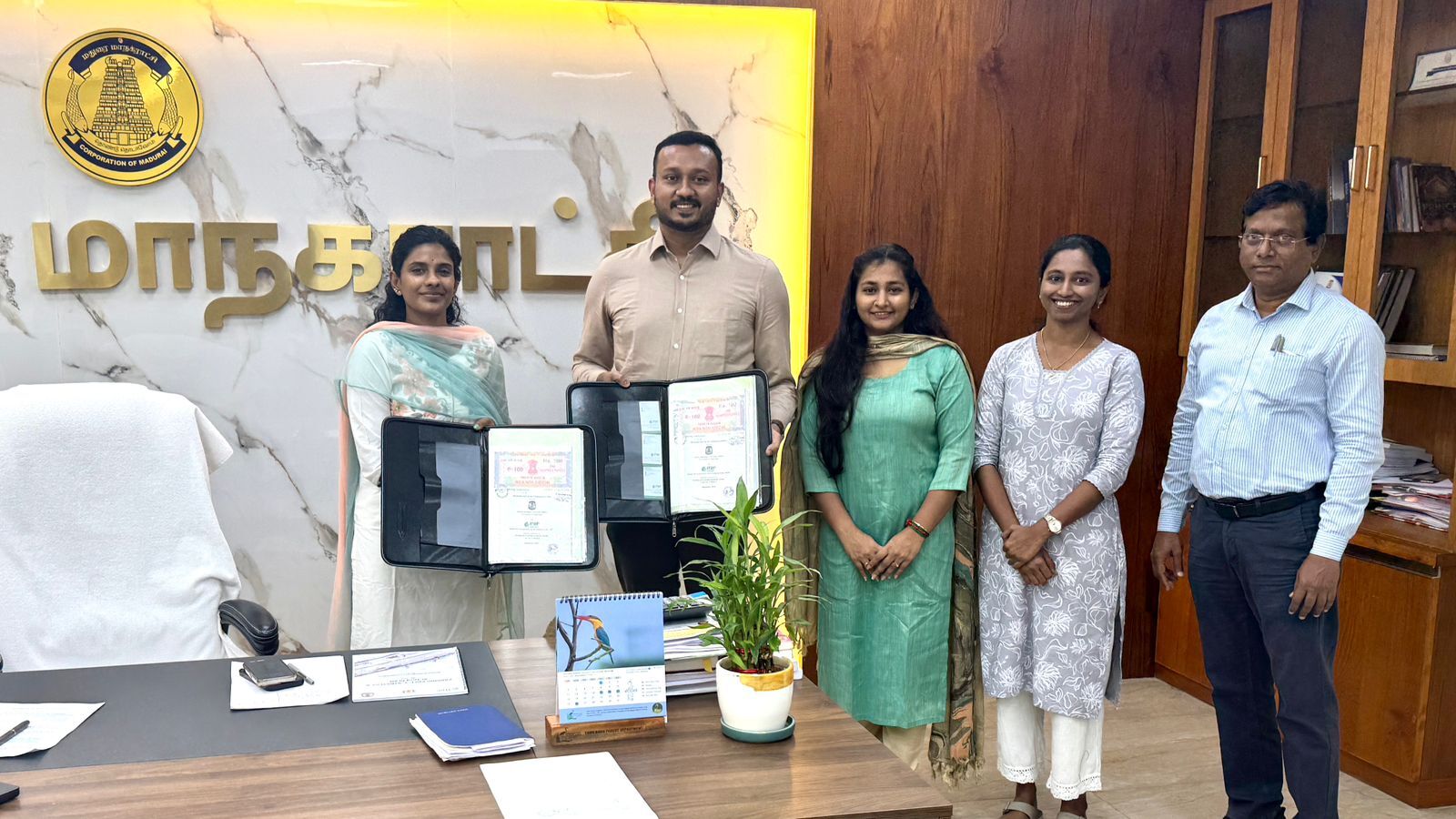
MoU with Madurai Municipal Corporation (MMC)
A new partnership was established with the MMC in January 2026, to support the city’s transition toward healthier streets, cleaner mobility, and more inclusive transport systems. ITDP will serve as a knowledge partner and technical advisor for healthy streets, non-motorised transport projects and parking management reforms, the development of Clean Air Zones, and improvements to public transport accessibility. The partnership will also contribute to electric vehicle (EV) charging and electrification planning, integration with the city’s Master Plan 2044, and institutional capacity building within the corporation.
Gender at the Centre: Webinar Series on Inclusive Budgets and Mobility
In March 2026, ITDP and GIZ India, with support from the Ministry of Housing and Urban Affairs (MoHUA), organised a two-part Urbanlogue x Mobilogue webinar series titled “Gender at the Centre: A Two-Part Series on Inclusive Budgets and Mobility” to mark International Women’s Day. The series focused on advancing more inclusive urban systems by examining the role of gender-responsive budgeting and gender-inclusive public transport.
The first webinar explored how public finance systems can better integrate gender considerations to ensure more equitable allocation and use of resources. The second focused on women’s mobility experiences and the importance of safety, comfort, and workforce inclusion in shaping more accessible and inclusive public transport systems. Together, the series contributed to ongoing conversations on embedding gender equity into urban governance and mobility planning.


Copyright © 2026 All rights reserved