7th IKI India Community Exchange
Project : Indo-German Support Project for Climate Action in India
GIZ India and TERI | Indian Habitat Centre, New Delhi
7th IKI India Community Exchange
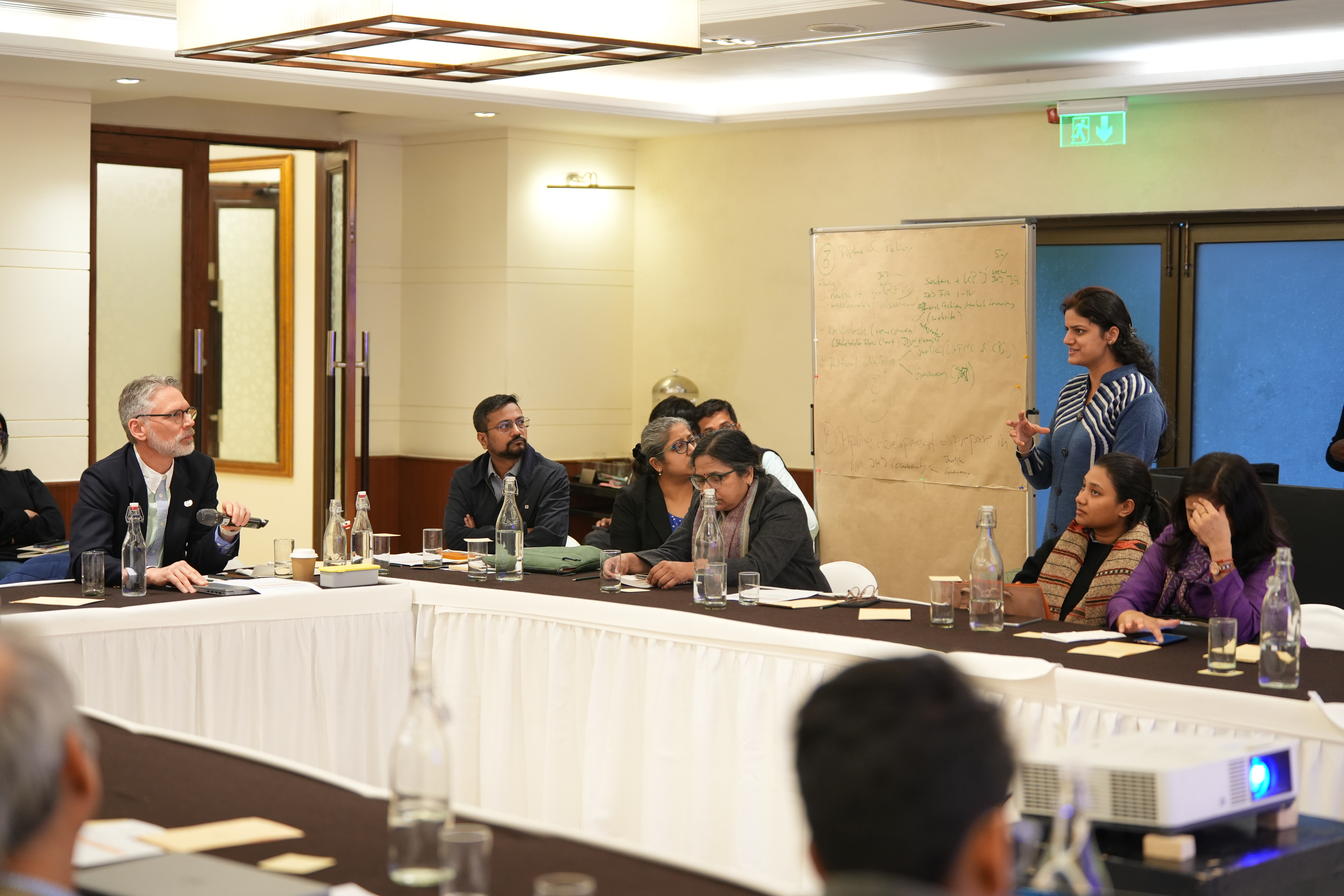
The 7th IKI India Community Exchange took place on 3 December 2025 in New Delhi at the Indian Habitat Centre. Hosted by TERI and GIZ India, the exchange brought together representatives from across the IKI India portfolio, implementing partners, and institutional stakeholders to share updates, reflect on recent developments, and strengthen cross-project learning and coordination within the IKI India community.
IKI India Portfolio and Communications
An updated snapshot of the current IKI India portfolio, comprising 27 ongoing projects across climate mitigation, adaptation, biodiversity and carbon sinks were presented. While the portfolio remains largely mitigation-focused, adaptation elements are embedded across multiple interventions.
Updates on the IKI India website highlighted the launch of a new, dedicated section on open IKI Large, Medium and Small Grants Calls, providing direct access to global call information, eligibility documents, and webinar recordings. Project teams were encouraged to actively contribute stories and updates to support ongoing knowledge exchange and visibility across the portfolio.
General Updates from IKI
The session provided an overview of recent developments within the IKI framework, including updates to IKI branding and communication guidelines following revisions issued by the Federal Ministry for the Environment, Climate Action, Nature Conservation and Nuclear Safety (BMUKN). Project teams were informed about the transition to the updated IKI logo and revised PR requirements, with supporting templates and guidance made available to ensure consistency across communication outputs.
Reflections from the IKI India Networking Workshop
Participants received a synthesis of key reflections from the 5th IKI India Networking Workshop (25–26 September 2025). The discussion reaffirmed that IKI’s impact is grounded in locally anchored implementation, supported by institutional capacity building and active engagement of local communities.
Strong emphasis was placed on interlinkages across mitigation, adaptation, biodiversity, and natural carbon sinks, with participants encouraged to proactively identify overlaps, share insights, and collaborate across thematic boundaries rather than working in silos.
Open IKI Calls
The Community Exchange included a detailed briefing on the open IKI Large Grants Calls announced at COP30, with particular focus on the India-specific call on strengthening the resilience of forests, ecosystems and biodiversity through inclusive adaptation strategies aligned with India’s forthcoming National Adaptation Plan (NAP).
Participants were guided through the eligibility framework, covering funding requirements, duration and financing conditions, partner country alignment, and technical suitability. The eligibility parameters were framed not only as compliance criteria but as design guidance for developing coherent, context-specific and implementation-ready project concepts.
COP30 Outcomes and Way Ahead
Reflections on the outcomes of COP30 in Belém highlighted continued commitment to multilateral climate action despite a challenging geopolitical context. From both Indian and German perspectives, outcomes were seen as broadly aligned with India’s priorities on adaptation, climate finance, and implementation, while acknowledging differing expectations on mitigation ambition.
Participants discussed how IKI-supported projects could contribute to operationalising COP30 outcomes in India, including through initiatives related to the Global Goal on Adaptation, just transition, and skills and employment. The potential role of IKI in supporting a future Indian COP33 presidency was also noted.
Spotlight on IKI India Projects
Two projects were featured to showcase implementation experience and emerging approaches:
-
Wetlands Management for Biodiversity and Climate Protection
The presentation highlighted the project’s comprehensive approach combining scientific assessments, participatory management planning, institutional strengthening, and digital knowledge systems. The handover of tools such as the Wetlands of India Portal to government authorities and the development of financing mechanisms like WEBCAP were highlighted as good practice examples for sustainability beyond the project cycle. -
Smart and Climate-Friendly Logistics in India
The newly launched IKI project outlined its focus on embedding climate considerations into India’s logistics sector, building on lessons from the Green Freight Programme. The project aims to support data-driven planning, efficiency improvements, and low-carbon logistics solutions in collaboration with government institutions and private sector actors.

Copyright © 2026 All rights reserved