
Restore Conserve and Protect Forest and Tree Cover for NDC Implementation in India (RECAP4NDC)
April-June | 2026Bilateral
Forests and Natural Carbon Sinks
Link To Project: Click Here
From Plans to Action: Advancing Participatory Forest Landscape Restoration (FLR) in Gujarat and Uttarakhand
 in Gujarat and Uttarakhand 2 RECAP4.jpg)
 in Gujarat and Uttarakhand RECAP5.jpeg)

Project Updates
From Plans to Action: Advancing Participatory Forest Landscape Restoration (FLR) in Gujarat and Uttarakhand
RECAP4NDC is preparing operational plans to translate landscape-level restoration recommendations into site-specific and implementable FLR actions in degraded landscapes of Gujarat and Uttarakhand. These plans will provide practical roadmaps for integrating ecological restoration, soil and water conservation, agriculture improvements, forest-fire mitigation and livelihood activities, while contributing to India’s Nationally Determined Contribution (NDC) commitments.
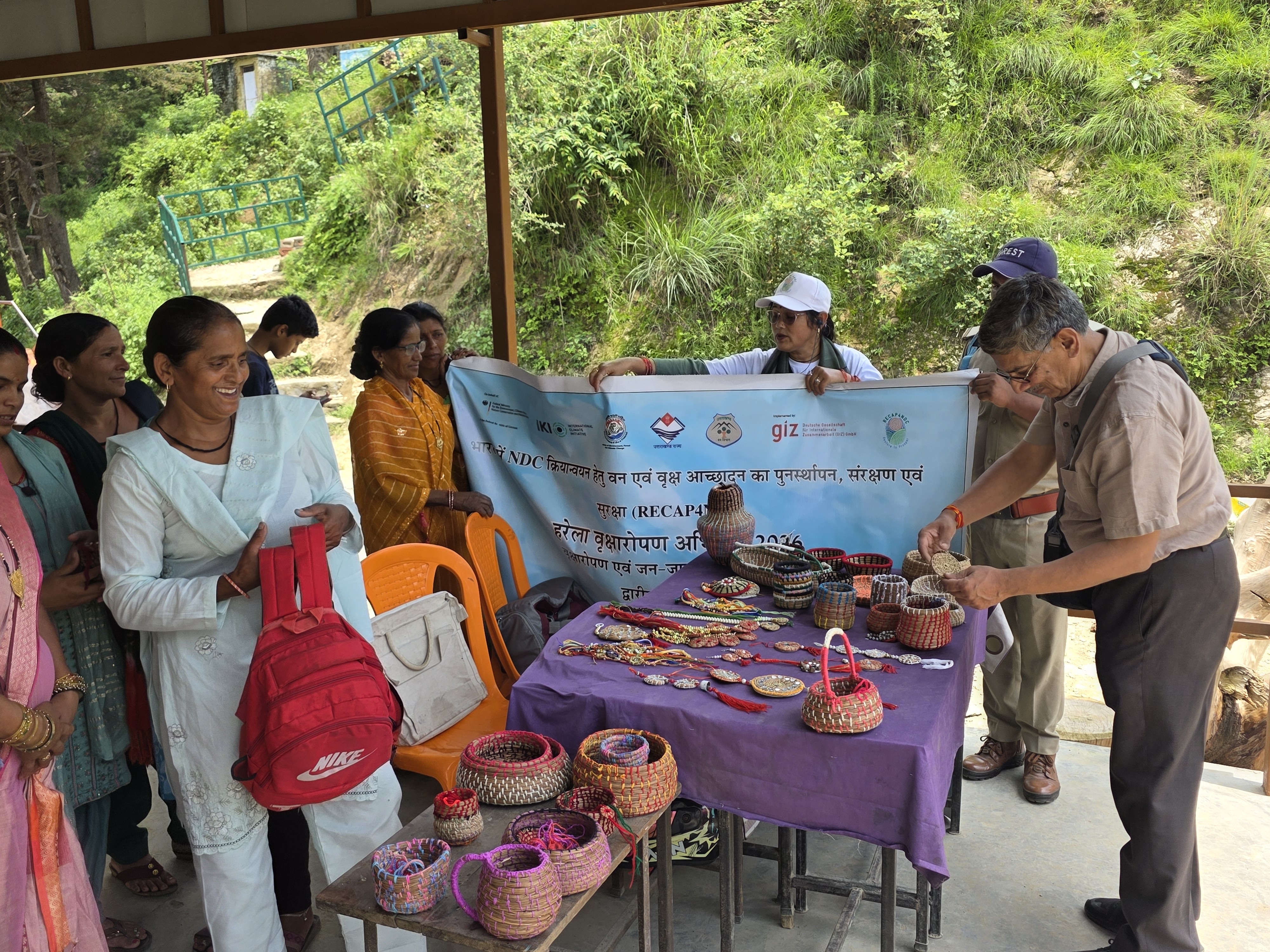
The plans are being developed through a participatory process involving local communities, Van Panchayats, Gram Panchayats, Self-Help Groups, Forest Departments and other relevant government departments. In Uttarakhand, detailed field surveys, mapping and ground verification were completed across the Kumaon region, covering approximately 190 - 200 hectares. Communities from Dhaspar, Kolgaon and Selakot reviewed the findings and proposed restoration activities to ensure that the plan reflects local priorities and long-term sustainability needs.
In Gujarat, baseline assessments across 27 villages identified Mithibili as a suitable intervention site. Proposed activities include border plantation in forest-adjoining areas and farms (such as plantation of teak and fruit-bearing species and inclusion of fruit species such as Mango, Guava, Chikoo, and Rayan to enhance livelihood opportunities for farmers), formation of Self-Help Groups to engage women in developing products from Palash leaves collected from the adjoining forests, invasive-species removal, and soil and moisture conservation.
These interventions help in improving ecosystem services, water and soil resources, biodiversity and livelihood opportunities, while also strengthening local institutions and women’s participation. Implementing them through landscape-level plans will help align community priorities with departmental programmes, bring in investments, strengthen monitoring and learning, and enable effective replication across other landscapes.



Copyright © 2026 All rights reserved